Chinese tourism tastes shifting
Europe is poised for a bumper Chinese tourism season as record numbers of travellers are expected this summer
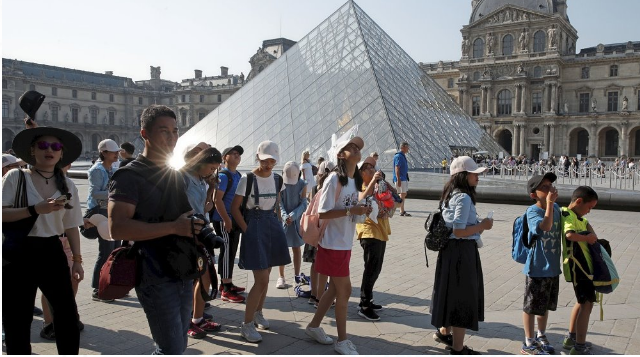
The stars are aligning for a bumper year of Chinese tourism in Europe thanks to a growing taste for culture over shopping and fears of a cold reception in Donald Trump’s America. „We came with our children to see the art, the culture, not to go to the mall,“ a 40-year-old woman who gave her name as Li told Reuters on a visit to Paris for the second time. In a new trend, Chinese tourists are increasingly eschewing package tours to Europe to strike out on their own trips off the beaten path, surveys suggest. Leisure travel bookings for July and August in Europe are up more than 4 percent from the same period of last year after an even stronger June, which coincided with a Chinese holiday, according to consultancy ForwardKeys. „This year will certainly be the year with the highest number of arrivals from China ever,“ Wolfgang Georg Arlt, director of China Outbound Tourism Research Institute, a consultancy based in Germany.
The U. S. president’s stand on trade relations with Beijing and illegal immigration, as well as his travel ban targeting Muslim-majority countries, is off-putting even though his tough talk is not directed at Chinese visitors. While Chinese bookings for Europe are up, those for the United States are down more than nine percent for the year to July 22 compared with the same period of 2017. Chinese tourism numbers in Europe staged a patchy recovery last year as memories of the 2015 Islamist attacks in European cities faded.
Chinese tourists are collectively the world’s biggest spenders on international tourism, forking out $258 billion last year. That means, with 143 million international tourist trips last year, they spent on average $1,800, though Arlt said the average was probably distorted by lavish spending by awealthy minority. Record tourist spending abroad even helped to push China’s current account into deficit in the first quarter for the first time since early 2010, offsetting the considerable trade surplus.
Some economists question whether the Chinese data does not disguisecapital flight in the form of purchases of life insurance and property abroad misclassified as tourism spending.
Though questions linger over how much is actually spent on tourism abroad, there is little doubt the spending is going to keep growing.
While in the past Chinese tourists spent lavishly on European luxury goods, they are increasingly focusing on special experiences such as staying in boutique hotels, dining in fancy restaurants and seeking out local products.
„They would rather buy a painting by a local painter than another Gucci bag,“ Arlt said.
LEIGH THOMAS
Text pochází z agentury Reuters Zdroj LN
SLOVÍČKA
poised připravený, nachystaný
bumper rekordní, úspěšný
stars align přeneseně podmínky jsou příznivé
eschew vyhýbat se
strike out začít, pustit se
off the beaten path mimo vyšlapanou cestu
coincide být ve stejnou dobu
consultancy poradenská firma
stand stanovisko
target zaměřit se
off-putting odrazující
patchy nevyrovnaný
recovery oživení
fade slábnout, vytrácet se
fork out vydat velkou částku
distort zkreslit
lavish okázalý, hýřivý
wealthy majetný, zámožný
offset vykompenzovat
considerable značný, výrazný
misclassify špatně klasifikovat
linger přetrvávat
fancy přepychový, vybraný
NAUČTE SE GRAMATIKU PODLE TEXTU
Dnes se zaměříme na sloveso spend, se kterým jsme se v článku setkali v několika větách. Jednou z nich je věta „… Chinese tourists spent lavishly on European luxury goods…“ („… čínští turisté hojně utráceli za evropské luxusní zboží …“). Sloveso spend + on přeložíme jako utrácet za. Pozor na české platit za, které v angličtině zní pay for.Sloveso spend má však ještě jiný význam, a sice trávit, strávit (čas něčím). V takovém případě použijeme spend + -ing slovesa –jako například v této větě: I spent the whole day reading. (Strávil jsem celý den čtením).
PŘELOŽTE:
Nehodlám trávit dovolenou ležením na pláži. Kolik jsi za to zaplatil? Neutrácej tolik peněz za zbytečnosti!