Archaeological site as cause for concern
U.S. envoys lend a hand as Israel digs down in east Jerusalem to open an ancient road used two thousand years ago
Envoys of the U.S.A. wielded hammers on Sunday, June 30, to break open a new tunnel at a Jewish heritage site in East Jerusalem, signalling Washington’s support for Israel’s hold over parts of the city that Palestinians seek for a future state.
Palestinians – who view the project and settlement activities in the Silwan district as moves by Israel to further cement control over areas it captured in the 1967 Middle East war – called the U.S. presence at the event a hostile act.
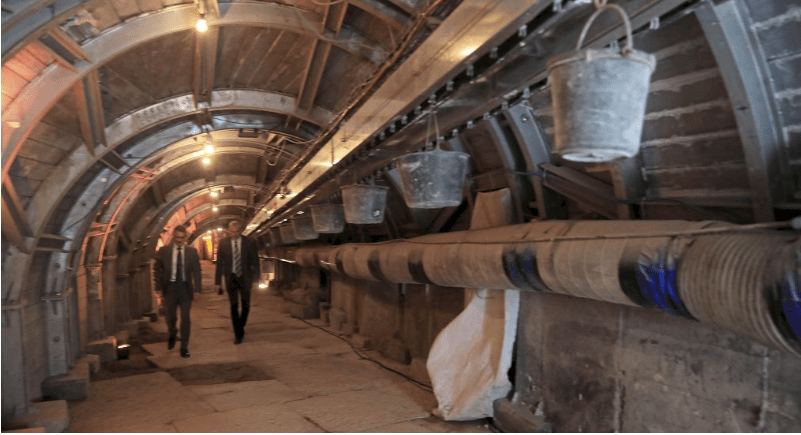
Two of President Donald Trump’s top Middle East advisers – peace envoy Jason Greenblatt and Ambassador to Israel David Friedman – came to the opening of an excavated road that Israeli archaeologists say was used by Jewish pilgrims to Jerusalem two millennia ago.
The “Pilgrims’ Road” site is part of the City of David, an open-air Jewish archaeological attraction built within Silwan through purchases of Palestinian-owned property that have at times been contested in court.
Israel captured Silwan and neighbouring districts in the 1967 conflict, annexed and settled them, angering foreign powers that back the Palestinians’ goal of building a capital there for a future state taking in the occupied West Bank and Gaza Strip.
“Some people, not necessarily friends of ours, are obsessing about my being here,” Friedman said at the ceremony, adding the excavation project uncovered “the truth, whether you believe or not … the truth is the only foundation upon which peace will come to this area”.
After his speech, Friedman, along with Greenblatt, Prime Minister Benjamin Netanyahu’s wife Sara and donors to the project, enthusiastically hammered through a wall to open the subterranean path to the holy site revered by Jews as the Temple Mount and by Muslims as the Noble Sanctuary.
“This is not a U.S. ambassador, (it) is an extremist Israeli settler, with Greenblatt also there, digging underneath Silwan, a Palestinian town,” chief Palestinian negotiator Saeb Erekat wrote on Twitter.
Breaking with long-standing U.S. policy and international consensus, U.S. President Donald Trump recognised Jerusalem as Israel’s capital in December 2017. He left open the possibility of a future Palestinian foothold there under a negotiated peace deal.
Israeli-Palestinian peace talks have been stalled since 2014 and the future of Jerusalem has long been at the centre of the Middle East conflict.
The recognition has prompted the Palestinians to snub a Trump administration they accuse of bias on behalf of Israel, which counts all of the city holy to Jews, Christians and Muslims as its indivisible capital – a status not recognised abroad.
REUTERS
SLOVÍČKA
LEND A HAND POMOCI
DIG KOPAT, HLOUBIT
WIELD TŘÍMAT, CHOPIT SE
HAMMER KLADIVO
HERITAGE DĚDICTVÍ, ODKAZ
HOLD OVER KONTROLA, MOC NAD
CAPTURE DOBÝT, ZMOCNIT SE
HOSTILE NEPŘÁTELSKÝ
EXCAVATE ODKRÝT (ARCHEOL.)
PILGRIM POUTNÍK
PURCHASE KOUPĚ, ZAKOUPENÍ
PROPERTY NEMOVITOST, MAJETEK
CONTEST VZNÉST PROTEST
COURT SOUD
BACK PODPOROVAT
OBSESS BLÁZNIT, BÝT POSEDLÝ
FOUNDATION ZÁKLAD
SUBTERRANEAN PODZEMNÍ
HOLY SVATÝ
REVERE UCTÍVAT, CHOVAT V ÚCTĚ
SANCTUARY SVATYNĚ
RECOGNISE UZNAT
FOOTHOLD OPĚRNÝ BOD, ZÁKLADNA
STALL POZASTAVIT
SNUB OSTENTATIVNĚ IGNOROVAT
BIAS UPŘEDNOSTŇOVÁNÍ, ZAUJATOST
INDIVISIBLE NEDĚLITELNÝ
Dnes se podíváme na frázové sloveso, které se objevilo ve větě „…a capital there for a future state taking in the occupied West Bank and Gaza Strip.” („… hlavní město budoucího státu zahrnujícího okupovaný Západní břeh a Pásmo Gazy.“).
Frázová slovesa se skládají z více částí a význam celého výrazu je jiný než význam jednotlivých slov. V češtině často rozdíl vyjádříme přeponou jako např. get on (nastoupit),get off (vystoupit), get down (sestoupit), get in (vstoupit) apod.
Vyberte správný výraz a odhadněte význam:
off / up / out / over / after
He took his wife … for diner. The plane took … on time. The son takes … his mother. The company was taken … by its competitor. I took … yoga lessons.
Řešení: take out – pozvat, take off – vzlétnout, take after podobat se, take over převzít, take up – začít (aktivitu)
Source: LN